

The Complete Guide to Home Battery Storage & Solar Fire Safety — What Every UK Homeowner Should Know
Written by Equipro — we design and test fire protection equipment specifically for lithium battery fires, including running our own controlled fire tests. Everything below is written to be understood by anyone, whether or not you know anything about electrics or fire safety.

Why trust this guide
There’s a lot written online about home battery and solar safety, but most of it is written by people summarising each other rather than working with this directly. We’re different: we build fire protection equipment for lithium batteries, and we deliberately push battery packs into failure, in controlled conditions, to see exactly what happens and what actually stops it. When we describe how a battery fire behaves, or what works to control one, it’s based on things we’ve observed directly — not just things we’ve read.
We should be upfront about one thing: we sell fire protection equipment, so we’re not a neutral third party. But that also means when we explain how these fires behave, it comes from direct testing experience rather than guesswork — and where we’re drawing on published research rather than our own testing, we’ve said so and named the source.
The purpose of this guide is simple: to help you, as a homeowner, understand enough about solar and battery fire safety that you can ask your installer the right questions, spot good practice when you see it, and avoid being rushed into a system that’s been fitted quickly rather than fitted properly. It is not a sales pitch, and most of what’s below applies whichever installer you choose.
Contents
How real is the risk?
How power gets from your roof to your home
How a battery fire actually happens
Solar panels vs. battery storage — is the risk the same?
Does what’s underneath your panels matter?
What is MCS, and why should you care?
What the rules say a safe battery installation must have
Inverter safety — the part people forget about
What actually happens if the fire service is called
Automatic fire protection — what’s available, and for which part of your system
What’s not recommended, and why
Is this guide right for your situation?
I already have a battery in my loft — what should I do?
AC-coupled vs. DC-coupled — what your quote actually means
Before you need it — being prepared
Frequently asked questions
Quick-reference glossary
The short version
Beyond the home — why Equipro is trusted with the highest-risk lithium battery environments
1. How real is the risk?
Home battery fires are rare. The UK’s official rulebook for home battery installations — a document called PAS 63100, published in 2024 by the British Standards Institution and backed by the Department for Energy Security and Net Zero — says clearly that these events don’t happen often. But it also says that when they do happen, they can be more intense than an average house fire, because of the way these batteries burn (explained fully in section 3). That’s exactly why this rulebook exists: not because home batteries are dangerous, but to make sure that small risk is properly managed.
A good way to think about it: a battery that’s the right product, installed in the right place, by a properly trained installer, following the rules, is a normal, low-risk piece of home equipment. It’s similar to a gas boiler — something that could be dangerous if done badly, but is safe in the vast majority of homes because of standards and competent installers.
One honest caveat, and one we think is important to be upfront about. If you look for statistics on how often solar and battery fires happen, you’ll find very different numbers from different countries — sometimes by a factor of ten or more. That’s not because some countries are dramatically less safe than others; it’s largely because countries count fires differently. A 2026 comparison study by Nik Rus, Professor Grunde Jomaas and colleagues, published in the academic journal Fire Safety Journal, found that the UK and Italy generally only count an incident as a “fire” if the solar panel itself burns, while Sweden and Slovenia count any fire anywhere in the system. Because of that single difference in counting method alone, reported rates in the same research ranged from around 4–11 fires per gigawatt of installed capacity per year, up to 37 — without necessarily reflecting any real difference in actual safety. Because of this, we’ve deliberately avoided quoting a single headline “X in every Y installations” figure in this guide — treat any statistic like that with healthy scepticism unless the source clearly explains what it’s actually counting.
One finding from the same research is genuinely reassuring for a domestic reader, though: risk scales heavily with system size. The research found that small home-scale systems made up around 90% of all the solar installations studied in Sweden, but only around half of the recorded fires — while large-scale systems above 1,000 kW (roughly 100 times the size of a typical home system) accounted for a hugely disproportionate share of incidents relative to how many of them exist. In plain terms: a typical home system sits firmly at the lower-risk end of the solar risk spectrum, not the higher end.
2. How power gets from your roof to your home

Before going further, it helps to understand the three separate pieces of equipment usually involved, because each one has a different job and a different set of risks.
Solar panels sit on your roof and turn sunlight into electricity. On their own, they’re low risk — most incidents linked to panels actually trace back to the wiring and connectors around them, not the panels themselves (covered in section 4).
The inverter is the box — often about the size of a small suitcase — that converts the electricity from your panels and battery into the type your home actually uses. This is a genuinely important component to understand, because industry data shows inverters are one of the more common starting points for solar-related fires, often because they’ve been squeezed into a poorly ventilated space like a loft or an understairs cupboard.
The battery stores spare electricity for later use — for example, power generated during a sunny afternoon that you then use that evening — and is the focus of most of this guide.
All three are usually installed and wired together, but each has its own safety rules, and a good installer treats each one individually rather than assuming “the solar guy sorted the electrics” covers everything.

3. How a battery fire actually happens
You’ll often see the term “thermal runaway” used without anyone explaining what it means. Here’s what’s actually going on inside the battery, in plain terms.
Think of a battery cell like a pressure cooker. Normally, everything inside is contained and working properly — energy goes in, energy comes out, and any heat produced is managed safely. A battery fire (thermal runaway) happens when that balance breaks. This can be triggered by a few things: charging the battery beyond what it’s designed for, physical damage like a knock or puncture, a fault from the factory, or the battery getting too hot from something nearby.
Once that happens, the battery starts making heat faster than it can get rid of it. That heat causes the chemicals inside to start breaking down, and as they break down, they produce even more heat, plus flammable gas. Heat causes breakdown. Breakdown causes more heat. More heat causes faster breakdown. It builds on itself — which is why it’s called a “runaway” reaction, in the same way a small campfire can suddenly flare up and start feeding itself out of control instead of burning steadily.

There are two things about these fires that make them harder to deal with than most other fires, and it’s worth understanding both, because different fire protection products are designed around different ones.
The first is oxygen. A lot of fire suppression works by starving a fire of oxygen — remove it, and an ordinary flame goes out. But when a lithium battery is in this kind of runaway reaction, part of what it’s producing carries its own oxygen, from within the battery’s own chemistry. This means it can carry on reacting even in conditions that would smother a normal fire.
The second, and just as important, is heat. A battery in runaway is generating a large amount of heat continuously, from deep inside the cell — not just as a visible flame on the surface. Plenty of fire suppression products (including many that work perfectly well on an ordinary fire) simply don’t carry enough capacity to absorb that much heat and cool the battery down. They can knock back a visible flame without actually stopping the reaction happening inside the cell.
Because of both of these factors, we test our fire protection equipment specifically on this type of fire, rather than assuming something that works on an ordinary fire will also work here — and as covered in section 10, the products that genuinely address this risk are the ones built to cool the cells directly, not just act on the flame.
The last important thing to understand is how it can spread. If one cell inside a battery pack starts this reaction, the heat it gives off can be enough to set off the exact same reaction in the cell right next to it — and then the one after that. This is why battery fires often produce a narrow, intense jet of flame, rather than spreading outward the way a burning sofa or curtain would.
Understanding this is exactly why the practical rules covered later in this guide — where the battery goes, how it’s ventilated, how it’s kept separate from the rest of your home, and how quickly a problem is spotted — matter so much. Every one of those rules exists either to stop this chain reaction starting in the first place, or to contain it if it does.
4. Solar panels vs. battery storage — is the risk the same?
If you’ve searched around this topic, you’ve probably come across stories about solar panel fires too — arcing, roof fires, even panels “exploding.” It’s worth being clear that solar panels and home batteries are two different pieces of equipment, with two different ways of going wrong, even though they’re often installed together.

Why do solar panels catch fire? The main cause found in UK cases isn’t the panels themselves — it’s something called “arcing.” This happens when electricity jumps across a small gap in a wire connection instead of flowing through it properly, creating a tiny spark that can get very hot. This usually points to a poor-quality or poorly fitted connector or switch, which can then set fire to nearby materials like roof timber.
This lines up with wider research: the same 2026 study by Nik Rus, Professor Grunde Jomaas and colleagues, published in Fire Safety Journal, compared solar fire data across the UK, Italy, Slovenia and Sweden and found that DC cabling and connectors — the wiring that carries electricity from the panels before it’s converted for home use — were consistently the single biggest identified cause, making up around a quarter of cases where a cause could be pinned down.
Can solar panels catch fire in extreme heat? Panels are built and tested to cope with a wide range of temperatures. When heat is involved in a fire, it’s almost always because it’s made an existing wiring fault worse — not because the panel material itself has caught fire from being hot.
Can solar panels explode? Not in the way that word usually means. What can happen is the small electrical spark described above (arcing), which can look and sound alarming and can set fire to nearby materials — but this is an electrical fault, not the panel bursting apart.
Are house fires caused by solar panels common? They’re still rare compared to how many homes have solar panels fitted. Most of the incidents on record involve older systems fitted in the early 2010s, before today’s stricter wiring rules and installer checks were in place.
What are the real dangers of solar panels on a roof? The two things that come up most often are the wiring-spark issue described above, and water getting into outdoor equipment boxes that weren’t sealed properly. Both come down to installation quality, not a flaw in the panels themselves.
Can solar panels work at night? No — solar panels only make electricity from daylight. This is actually one of the main reasons people add battery storage: it lets you save up power made during the day and use it after dark, which is what most of this guide is about.
So how does this connect to your battery? A well-built solar-and-battery system can actually be safer than solar alone, because modern equipment lowers the wiring-spark risk described above. But the battery brings its own separate risk — the fire behaviour explained in section 3 — which is what the rules in section 7 are designed to manage. Solar panels and batteries need different safety measures: proper wiring and spark protection for the panels, and the right location, airflow, separation and smoke detection for the battery. A properly trained installer takes care of both as part of the same job.
5. Does what’s underneath your panels matter?
Yes — and this is worth specifically asking your installer about, particularly if you have a flat roof, or a roof insulated with foam board.
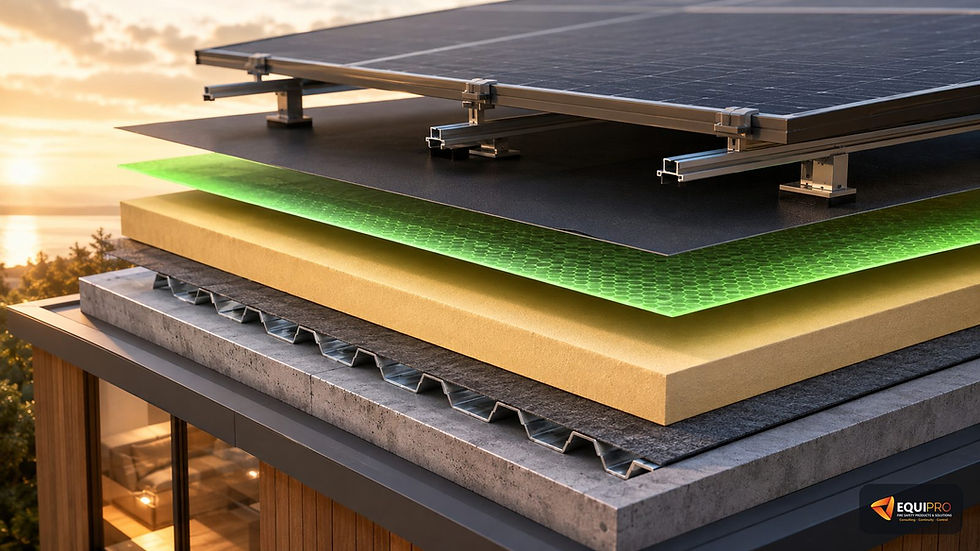
Research into this exact question — led over the past decade by fire safety researcher Professor Grunde Jomaas and colleagues, including through work with insurers investigating real projects — found that adding solar panels to a roof can change how that roof behaves in a fire, and that this depends heavily on what the roof itself is made of. Roofs built using certain foam insulation with a waterproof outer layer on top (often called a “membrane roof,” and common on flat roofs and extensions) can become more vulnerable once panels are fitted, because the panels and the roof effectively start behaving as one connected system, rather than as two separate things simply sitting on top of each other.
The solution that’s come out of this research is something called a “mitigation layer” — an extra fire-resistant layer fitted between the panels and the roof, specifically to manage this added risk on the roof types where it applies. This isn’t something every home needs — a standard pitched, tiled roof is generally lower risk in this respect — but it’s a legitimate, informed question to put to your installer if your roof is flat or uses foam insulation: ask whether a mitigation layer is needed for your specific roof, and if so, make sure it’s actually included in the job, not treated as optional.
As the researchers behind this work put it, the key point isn’t really about the panel or the roof covering in isolation — it’s the whole system, panel and roof together, that determines the risk.
6. What is MCS, and why should you care?
MCS stands for Microgeneration Certification Scheme. It’s the UK’s official quality mark for home renewable energy equipment — things like solar panels, heat pumps, and battery storage. It’s not a legal requirement, but in practice it’s treated as the mark of a properly qualified installer.

MCS checks two things: the products being used (is the battery or inverter a properly tested, listed product?) and the installer doing the work (are they trained, checked, and following the rules?). Both have to pass for the job to count as MCS certified.
Here’s why this matters to you as a homeowner:
Money — if you want to be paid for any spare electricity your home sends back to the grid (a government scheme called the Smart Export Guarantee), your installation usually needs to be MCS certified.
Peace of mind — an MCS-certified installer has proven they know what they’re doing and are using approved equipment. You’ll get a certificate to keep, which can help with insurance, selling your home later, and any warranty claims.
A paper trail — MCS-certified jobs are logged centrally, so there’s a record of exactly what was fitted and by whom.
How does MCS relate to PAS 63100 (the rulebook mentioned earlier)? They cover different things and work together. MCS checks that your installer is competent and using approved products. PAS 63100 sets out the detailed safety rules — where the battery can go, how it needs to be protected, and so on — that a competent installer should already be following.

Put simply: MCS tells you the installer can be trusted; PAS 63100 tells you what a properly done job actually looks like.
There’s a third credential worth knowing about too: Part P. Fitting a battery usually involves electrical work like new circuits or changes to your consumer unit — the kind of work covered by Part P of the Building Regulations (England and Wales). This work must either be carried out by an electrician registered with a government-authorised Competent Person Scheme — the main ones are NICEIC, NAPIT, ELECSA and Stroma — or separately notified to your local council’s Building Control department, which costs the homeowner extra time and a fee. Any of these four schemes is equally valid; you don’t need a specific one. In practice, a properly set-up solar and battery installer will usually already be registered with one, since it’s needed for general electrical work anyway — but it’s a reasonable, specific question to ask if it isn’t obvious from their paperwork, and you should be given a Building Regulations compliance certificate for the electrical work alongside your MCS certificate and PAS 63100 statement of conformity.

7. What the rules say a safe battery installation must have
If you’re having a battery fitted, here’s what a properly trained installer, following PAS 63100, should be doing for you. If your installer glosses over these points, skips them, or seems unfamiliar with them, that’s a warning sign worth taking seriously.
Where the battery goes matters most. The best place for a home battery is outdoors, away from any room you live in. If that’s genuinely not possible, it can go indoors — but only somewhere that meets the airflow, fire-separation and size rules below. A battery must never go in a bedroom, on an escape route out of the house (like a hallway, landing or staircase), in a loft or roof space, in a basement with no outside access, or within 2 metres of anything flammable, like stored fuel.
A specific point worth being absolutely clear on: your battery must not be installed in a loft or attic, under any circumstances. This is one of the most common points of confusion, because the inverter is often — and quite legitimately — installed in a loft (see section 8). The rules treat these two pieces of equipment differently: an inverter can go in a loft, with the right precautions; the battery itself cannot, full stop. If an installer proposes putting your battery in a loft or roof space, that is not compliant with PAS 63100, and is a clear reason to ask further questions or seek a second opinion.
If you already have a battery installed in a loft from before this rule existed, this doesn’t mean your installation was done wrong at the time — standards have moved on. See section 13 for our guidance on what that means for you.
Quick reference — where can your equipment actually go?
Location | Battery | Inverter | Notes |
Outdoors (ground or wall-mounted) | Yes — preferred | Yes | Best option for both, where practical |
Detached garage / outbuilding | Yes | Yes | Higher energy limits apply here (see below) |
Attached garage, fire-separated | Yes | Yes | Needs at least 60 minutes’ fire separation from the house |
Ventilated indoor cupboard / utility room | Yes — conditions apply | Yes | Must meet ventilation, separation and detection rules |
Loft or roof space | No — never permitted | Yes — conditions apply | Inverter needs a linked smoke/heat detector or can be fitted with an EQUIPASS automatic fire system; battery is not allowed here at all |
Bedroom | No — never permitted | No — not recommended | |
Escape route (hallway, stairs, landing) | No — never permitted | No — not recommended | Must not obstruct or endanger a means of escape |
Basement / cellar with no outside access | No — never permitted | No — not recommended | |
Within 2 metres of flammable materials or fuel storage | No — never permitted | No — not recommended |
This table summarises the general rules; always confirm the specifics for your home with your installer.

There are size limits depending on location. “kWh” (kilowatt-hours) is just a way of measuring how much energy a battery can store — think of it like the size of the battery’s fuel tank. Most home batteries on the market today are somewhere between about 5 and 20 kWh, so the limits below are generous headroom for a typical home, not a tight ceiling. The total amount of storage allowed in one house is: - Up to 80 kWh if it’s outdoors, in a separate garage or outbuilding, or in an attached garage with at least an hour’s worth of fire protection between it and the house. - Up to 40 kWh anywhere else.
Indoor rooms need fire protection built in. If the battery is indoors, the walls, ceiling and floor of that room need to be able to hold back a fire for at least 30 minutes, giving you and anyone else in the house time to get out safely, and giving the fire service time to respond.
Indoor locations need fresh air. A battery kept indoors needs a vent that brings in fresh air from outside, positioned well away from doors, windows and other vents.
Battery rooms need a smoke alarm. If the battery is somewhere you don’t go into often — a cupboard, for example — it needs its own smoke alarm, and that alarm has to be connected to the rest of your house’s fire alarm system, not just sound on its own in that one room.
The battery itself has to meet safety standards. Manufacturers are required to test how their product could fail and build the casing accordingly — anything that fails this test too badly simply isn’t allowed to be sold for use in homes. The battery casing should also only be openable with a tool, not by hand, so it can’t be accidentally opened.
The battery should be able to protect itself. A properly built system constantly checks its own temperature and condition. If something starts going wrong, it should warn you (a light and/or a sound) and disconnect itself automatically. If the problem doesn’t go away, that’s the point at which any automatic fire suppression system, if fitted, should activate.
Clear signs for anyone entering your home. Your electrical fuse box, meter, and the point where mains power enters your house should all be labelled to show a battery is present — this matters for you, but really matters for the fire service if they’re ever called out.

You should get proper paperwork. After the job, you should be given an MCS certificate, a signed statement confirming the work follows PAS 63100, and clear instructions covering how to turn the system on and off, what any warning lights or sounds mean, and what to do if there’s a fire.
8. Inverter safety — the part people forget about
Your inverter should be treated with almost as much care as your battery, for a simple reason: it’s handling a lot of electrical current, it generates heat while doing so, and if it’s installed somewhere with poor airflow, that heat has nowhere to go.
Where it should go. Inverters need space around them for air to circulate, away from direct sunlight and away from anything flammable stored nearby. A garage wall or a well-ventilated utility space is usually better than a cramped cupboard.

Lofts need extra care. If an inverter is fitted in a loft — a common choice, since it’s often unused space — it should have a dedicated smoke or heat detector installed nearby, linked to the rest of the house’s fire alarm system. Lofts are rarely checked day-to-day, so an early problem could otherwise go unnoticed until it’s serious.
Poor installation practice like this — an inverter crammed against loose insulation with no clearance for airflow — is a genuine fire risk, not just an untidy job.

Surge protection. A surge protection device (a component that protects your electronics from sudden spikes, similar to why you might use one on a home computer) helps protect the inverter itself from damage that could otherwise lead to a fault.
Isolation switches matter — but they’re not risk-free themselves. Your installer should fit a clearly labelled switch that lets the whole system be safely shut down. This is important for two reasons: it gives you a quick way to shut everything off if you’re ever worried about it, and it lets the fire service quickly make the system safe if they’re ever called out (more on exactly what they do in the next section).
It’s worth knowing something a bit surprising: research has found that these switches can, in a small number of cases, end up being the actual cause of a fire, rather than just a safety feature. The 2026 Fire Safety Journal study by Nik Rus, Professor Grunde Jomaas and colleagues found that around 1 in 5 solar-related fires in Sweden involved this type of switch. A separate report looking at similar devices in the US found an even higher share. Different countries, different products, similar pattern.
This isn’t a reason to go without one — it’s a legal safety requirement, and not having one would be worse, since it’s exactly what lets the fire service make your system safe quickly. But it is a good reason to make sure yours is a well-made, properly installed, properly maintained component, rather than the cheapest option or an afterthought. It’s a fair question to ask your installer: which brand and model are they fitting, and has it had any manufacturer safety notices?
9. What actually happens if the fire service is called
Understanding this in advance means you won’t be caught off guard if it ever happens, and it explains why several of the rules covered earlier in this guide — clear labelling, an accessible isolation switch, the battery being properly enclosed — matter so much in practice.

Fire crews treat battery fires differently to an ordinary house fire. Because of the self-feeding reaction explained in section 3, a battery fire isn’t always something that can simply be put out and considered finished. Crews will often use large amounts of water — not necessarily to put out visible flames, but to cool the battery and the surrounding structure and slow the reaction down.
They may choose to hold back rather than go straight in. Depending on the situation, firefighters may protect the surrounding building and allow a fire that’s contained inside a sealed battery enclosure to burn itself out under controlled conditions, rather than opening it up and approaching directly.
They’ll look for your isolation switch and safety labelling straight away. This is exactly why the clear labelling requirements covered in section 7 matter, and why the switch needs to be somewhere obvious rather than hidden away. It lets an arriving crew immediately know a battery system is present, roughly where it is, and how to make it electrically safe — all before they’ve even worked out what’s happening inside your home.
The property may need to stay empty for longer than you’d expect. A battery fire can start up again hours after it looks like it’s out, for the same reason it’s hard to extinguish in the first place. Because of this, fire crews will sometimes ask that a property isn’t lived in again straight away, or keep checking on it for a while, even once there’s no visible fire left. This isn’t excessive caution — it’s a direct, sensible response to how these fires behave.
What this means for you as a homeowner: if you’re ever in this situation, follow the fire service’s instructions exactly, including about when it’s safe to go back inside — even if that takes longer than you’d expect, or the fire looks like it’s already out.
10. Automatic fire protection — what’s available, and for which part of your system
In exceptional risk-based circumstances: roof panels and internal escape routes/stairways can be protected by EQUINOX-HP domestic watermist; the inverter and battery pack are each protected by an EQUIPASS system — a clean agent for the inverter, and Cold Fire for the battery pack.
The rules covered in section 7 are the legal minimum standard. If you want to go further, there’s fire protection technology built for exactly this purpose — and testing this is what we do day-to-day. Different parts of a solar-and-battery system carry different risks, so the right protection often isn’t one single product — it’s a combination matched to each part.

EQUINOX HP Cold Fire Mist protection for roof-mounted panels and the inverter area. Equinox watermist systems contain cold fire additive which is safe and non-toxic and tested and certifed for lithium battery fires. Our watermist systems release a very fine spray of water and Cold Fire— much finer than a garden hose or a standard sprinkler — designed to cool the area and control a fire without using large volumes of water. This is a sensible option for the roof space where your panels sit, the area around your inverter and the loft space.
Clean agent protection for the inverter — but only if there’s no lithium battery inside it. Clean agents don’t all work the same way. Some suppression gases do work mainly by lowering the oxygen level in the air. Others — including a common type called FK-5-1-12 — work mainly by absorbing heat from the fire and by chemically interrupting the combustion process taking place in the air, rather than by removing oxygen at all.
For an ordinary electrical fire, either approach can work well, which is why clean agent systems are a well-established, proportionate choice for standard electrical equipment like an inverter. But as explained in section 3, a lithium battery fire is a different problem: none of these mechanisms give a clean agent enough capacity to draw the large, sustained heat out of the battery cells themselves, and the battery’s ability to generate its own oxygen internally removes the other main lever these products rely on.
So for a standard inverter — which is an electrical conversion device, not a place where energy is stored — a clean agent system connected to your home’s main fire alarm is a reasonable, proportionate choice. It’s worth checking with your installer whether your specific inverter has any battery cells built into it (some hybrid units do), since that changes which protection is appropriate.
A cooling agent for the battery pack itself. Because the battery is where the lithium-specific risk described in section 3 actually lives, it needs protection that cools the packs and cells directly rather than acting on the surrounding air. This is delivered through a system connected directly to the battery enclosure, so that if a problem is detected, the cooling agent reaches the packs and cells quickly and automatically, without anyone needing to be present or approach the unit. This is only advised if you have concerns about evacuating safely and in a timely manner in the event of a fire as these systems are designed to buy time for the fire and rescue service to arrive on the scene and take control.
Whole-home watermist or sprinkler protection, where a risk assessment says it’s needed. For some homes, protection doesn’t stop at the equipment itself — a fire risk assessment, or your own requirement may recommend broader protection across the home, either throughout the whole property or specifically along escape routes (hallways, stairs, the route to your front door). This isn’t standard for every home battery installation, but it’s a particularly important consideration if anyone in the household has a mobility or access difficulty that would make a fast evacuation harder. In those cases, protecting the escape route itself — buying extra time to get out safely — can matter as much as protecting the equipment.

None of this is one-size-fits-all and it does not apply to everybody or every home. What’s actually needed for your home depends on where your equipment is located, how your household is set up, and what a proper risk based assessment identifies — which is exactly why this is a conversation to have directly with your installer or a fire safety specialist, rather than something to decide from a product list alone.
11. What’s not recommended, and why
Not every fire safety product on the market is suitable for this type of fire. It’s worth knowing what to avoid, and why, so you’re not misled by something that sounds impressive but isn’t right for the job.

Aerosol fire suppression systems. These are small devices that release a fine powder or mist into the air when triggered, designed to interrupt a fire burning in that space, typically by chemically breaking up the combustion reaction rather than by cooling anything. They work well for some types of fire, but they act on the flame in the surrounding air rather than drawing heat out of the battery itself. As explained in section 3, a lithium battery fire keeps generating heat continuously from deep inside the cell, and can supply its own oxygen as it does so. Because an aerosol system doesn’t have the capacity to reach or cool what’s happening inside the battery, the fire can start up again once the aerosol has dispersed, even if the visible flame briefly goes out.
Clean agent gas systems, specifically for the battery. As covered in section 10, clean agents work in different ways depending on the product — some by lowering oxygen levels, others (like FK-5-1-12) mainly by absorbing heat from the flame and chemically interrupting the combustion reaction in the air. This makes them a reasonable choice for a standard inverter, but not for the battery pack itself. Whichever mechanism is involved, none of them provide enough heat-absorbing capacity to cool the actual mass of the battery cells — and the battery’s own internal oxygen generation removes the other lever some of these products rely on. The practical result is the same either way: a clean agent can suppress the visible flame temporarily without stopping the reaction inside the cells, so the fire can reignite once the agent has dispersed.
Handheld fire extinguishers — including ones marketed for lithium batteries. This is less about the chemical inside the extinguisher and more about a simple safety problem: using any handheld extinguisher means a person has to get close enough to spray or apply it. A battery going through this kind of failure gives off gas that’s both flammable and can be harmful to breathe, and it can flare up unpredictably. That’s not something a homeowner without training and protective equipment should be standing near, however good the product in the extinguisher is. On top of that, home battery enclosures are designed under the rules in section 7 to only be opened with a tool — precisely so nobody can get inside by accident. That’s a good safety feature day-to-day, but it also means there’s no practical way to get an extinguisher agent onto the cells inside a sealed unit during a fire without opening it up, which is exactly what you shouldn’t be doing.
So what should happen instead? For a fixed home battery installation, the safe approach is a system that’s built in from the start — one that detects a problem automatically, disconnects the battery itself, and (if fitted) triggers suppression automatically, without needing a person nearby to operate anything.
If a fire does start despite all of this, the right response for a homeowner is the same as for any serious house fire: get everyone out, stay out, and call the fire service — do not attempt to fight it yourself.
12. Is this guide right for your situation?
The rules covered in this guide (PAS 63100) apply to most typical UK homes, but not every situation. It’s worth checking where you stand before assuming everything here applies directly to you.
This guide’s rules generally apply if: you live in a standard house or bungalow under 200 m² in floor area, with a standard low-voltage electrical supply, using a new (not second-life) battery.
You may need extra, specific advice if: - You live in a flat or apartment block, particularly a taller residential building — different, often stricter, rules can apply, and shared-building considerations come into play that this guide doesn’t cover. - You’re considering a second-life battery — one that’s been repurposed from an electric vehicle rather than made new for home storage. There’s currently no established safety standard covering repurposed batteries specifically, which means extra caution and a suitably qualified installer’s own risk assessment are essential. - Your home is unusually large (over roughly 200 m²) — the fire safety principles still broadly apply, but it’s worth having a fire safety professional involved directly rather than relying on standard guidance alone. - You’re in a listed building or conservation area — you may need additional permissions before fitting external equipment, on top of the standard electrical and safety rules.
If any of these apply to you, mention it explicitly to your installer and ask directly how they’re addressing it — don’t assume standard guidance automatically covers your case.
13. I already have a battery in my loft — what should I do?
If you’re reading this because you already have a battery installed in your loft, we want to say clearly upfront: this section is our own professional view, based on our experience testing and working with this exact type of fire risk — not an official rule, and not something PAS 63100, MCS or the Department for Energy Security and Net Zero has published guidance on. As far as we’re aware, nobody has issued clear advice for existing installations like yours yet, which is a genuine gap. We think that gap is worth addressing honestly rather than leaving you with no answer at all, so here’s how we’d think about it.
First, the most important thing: this doesn’t mean your installation was done wrong. PAS 63100 was only published in 2024. Before that, there was no UK standard specifically restricting where a home battery could go, including lofts. If your battery was fitted before then, your installer wasn’t cutting corners or ignoring the rules — the rule didn’t exist yet. What’s changed isn’t that your battery suddenly became dangerous; it’s that the industry’s understanding of this specific risk has moved on, based on incident data and testing that’s built up since. Standards catching up with real-world evidence is normal and happens across every industry — it doesn’t mean everything installed before the update is now an emergency.
Second, it’s worth understanding why lofts were specifically excluded, because that’s what should actually drive what you do next. It isn’t one single problem — it’s a combination of several factors, each of which can be addressed on its own:
Lofts experience much wider temperature swings than the rest of the house, and heat is a factor in battery degradation and fault risk.
The only barrier between a loft and the rooms below is usually a ceiling and a hatch — not the kind of fire-resisting separation PAS 63100 now requires.
Lofts are rarely visited. A developing fault could go unnoticed for a long time, compared to a battery in a garage or utility room that someone walks past daily.
A fire starting directly above bedrooms, in the hardest part of the house to reach, is about the least favourable location for both escape and firefighting access.
Lofts tend to accumulate stored boxes, old furniture and other combustible clutter, which can turn a contained battery fault into something that spreads.
None of these five factors require moving the battery to fix. That matters, because it means the sensible response isn’t automatically “get it out of the loft immediately” — it’s “reduce the specific things that make a loft riskier than anywhere else.”
So here’s what we’d actually suggest, in order of priority:
Do these now — low cost, no installer needed, meaningful difference: - Make sure there’s a working smoke or heat alarm in the loft itself, interlinked with the rest of your house alarm system, not just a standalone battery-powered detector up there on its own. This is exactly what PAS 63100 already requires for any battery in a location that isn’t visited often — it’s just as relevant applied retrospectively. - Clear combustible clutter away from around the battery — stored boxes, old furniture, anything flammable. This is genuinely one of the fastest, cheapest risk reductions available to you. - Make sure you (and anyone else in the household) knows where the isolation switch is and how to use it. - Check that ventilation around the unit isn’t blocked or obstructed.
Get a professional opinion, rather than guessing: how much this all actually matters for your specific situation depends on things a guide like this can’t know — your battery’s chemistry, age, condition and any fault history, and exactly how your particular loft is laid out. A proper fire risk assessment from a suitably qualified professional is the honest way to get a real answer rather than a generic one. This is a case where “it depends” genuinely is the accurate answer, not a way of avoiding one.
Think about relocation at the right moment, not as an emergency. For most existing installations, we don’t think an urgent, disruptive removal is a proportionate response to the incremental risk involved. But there are natural points where it’s worth planning to move the battery to a compliant location: when it’s next serviced, if a warranty or replacement event happens anyway, if you’re already having loft work or a conversion done, or if you come to sell your home. On that last point specifically — as PAS 63100 becomes more widely known, it’s increasingly likely that a buyer’s surveyor or solicitor will ask about it during a sale, so planning ahead of that rather than being caught out by it is a practical reason to act, separate from the safety case alone.
If you’re not sure where to start, the honest first step is simply asking a qualified fire safety professional to look at your specific setup — including us, if that’s useful — rather than trying to judge the risk from a general guide, or assuming either that it’s fine to ignore or that it needs fixing tomorrow. Both of those extremes are more about how the question feels than what your particular situation actually calls for.
14. AC-coupled vs. DC-coupled — what your installer’s quote actually means

You’ll likely see these terms on any quote you get, so it’s worth understanding what they mean.
DC-coupled systems connect the battery more directly into the solar system’s own wiring, before it’s been converted into the type of electricity your home uses. This can be slightly more efficient, but it does mean more of your system’s wiring is carrying higher-voltage DC current, which — as covered in section 4 — is the type of electricity most linked to arcing-related faults if connections aren’t installed correctly.
AC-coupled systems convert the electricity to the household type earlier in the process, using a separate inverter for the battery. This generally means less DC cabling running through your home, though it can be marginally less efficient overall.
Neither is inherently unsafe — both are used safely in millions of installations — but it’s a reasonable question to ask your installer which they’re proposing and why, particularly if DC cabling will be running through occupied parts of the house rather than staying external.
15. Before you need it — being prepared
A good safety setup isn’t just about what’s installed; it’s about everyone in the household knowing what’s there and what to do.

Know where your isolation switch is, and make sure anyone else who spends time in your home — a partner, older children, a house-sitter — knows too.
Tell tradespeople before they start work. If an electrician, builder, or anyone drilling into walls or the loft doesn’t know a battery or its wiring is nearby, that’s exactly the kind of situation that leads to accidental damage.
Keep your paperwork somewhere accessible — your MCS certificate, your PAS 63100 statement of conformity, and your user instructions. If you ever need to make an insurance claim, sell your home, or call out an engineer, having these ready saves real time.
Tell your home insurer that you’ve had a battery installed. Most insurers want to know about significant changes to your property, and having your MCS and compliance paperwork ready makes this a quick conversation rather than a complicated one.
If you move house, pass all of this documentation on to the new owner — it’s genuinely useful to them, and shows the system was done properly.
16. Frequently asked questions
Are home batteries safe?
Yes, when the right product is installed in the right place by a properly trained installer. Fires involving properly installed home batteries are rare, and the rules exist specifically to keep it that way.
What actually happens inside a battery during a fire?
Something disrupts the battery — overcharging, physical damage, a manufacturing fault, or too much heat. This causes the battery to heat up faster than it can cool down, which then breaks down the chemicals inside, releasing even more heat and flammable gas. Some of that gas carries its own oxygen, which is why it can keep burning even in conditions that would normally put a fire out, and it can spread from one cell to the next inside the pack.
What is MCS certification, and do I need it for a home battery?
MCS is the UK’s official quality mark for renewable energy installations, including batteries. It’s not legally required, but you usually need it to be paid for spare electricity you export to the grid, and it’s the clearest sign your installer is properly trained and using approved equipment.
What’s the difference between MCS and PAS 63100?
MCS checks that your installer and the products they use are properly certified. PAS 63100 is the detailed rulebook covering exactly where the battery can go, how it must be protected, and so on.
Does my electrician need to be NICEIC registered?
NICEIC is one valid option, but not the only one — what actually matters is that they’re registered with a government-authorised Competent Person Scheme, which also includes NAPIT, ELECSA and Stroma. This covers the underlying electrical work (like new circuits or consumer unit changes) under Part P of the Building Regulations, and is a separate credential from MCS. You should get a Building Regulations compliance certificate for the electrical work, in addition to your MCS certificate and PAS 63100 statement of conformity.
Can I have a battery in my garage?
Yes — a garage is one of the preferred locations, and generally allows a bigger battery than most indoor spaces, as long as an attached garage has proper fire protection between it and the house.
Can I install my battery pack in the loft or attic?
No — a home battery must never be installed in a loft or roof space, under PAS 63100. This applies regardless of how well ventilated or accessible the loft is. This is a genuinely common point of confusion, because your inverter can go in a loft, provided it has a linked smoke or heat detector nearby (section 8) — but the battery itself is a different piece of equipment with different rules, and lofts are specifically excluded for the battery. See the quick-reference table in section 7 for a full breakdown of where each part of your system can and can’t go.
Does my battery need its own smoke alarm?
Only if it’s somewhere you don’t go into often, like a cupboard — and in that case, yes, and it has to be linked to your main house alarm.
What happens if the battery detects a problem?
It should warn you with a light and/or sound and automatically disconnect itself. If the problem doesn’t clear, that’s when any fitted fire suppression system should activate.
Is a bigger battery more dangerous?
Not really — the size just changes what location and fire-protection rules apply. A larger battery, sited and protected correctly, isn’t inherently riskier than a smaller one.
Can I fit a battery myself?
No — this work is covered by UK wiring regulations and PAS 63100, and needs to be done by a properly trained installer (ideally MCS certified) who can give you the right paperwork afterwards.
Why do solar panels catch fire?
Most UK cases come down to a poor electrical connection creating a small spark (arcing), usually linked to a poorly fitted part or an ageing installation, rather than the solar panel itself being faulty. Research comparing data across several European countries has consistently found DC cabling and connectors to be the single largest identified cause.
Does having solar panels make my battery more likely to catch fire?
No — they’re separate pieces of equipment with separate ways of going wrong. A properly installed battery carries the same low risk whether or not you also have solar panels.
Can I put out a lithium battery fire with a normal fire extinguisher?
Not reliably. As explained in section 3, these fires are hard to control for two reasons: the battery can generate its own oxygen internally as it breaks down, and it produces a large, sustained amount of heat from deep inside the cell. A normal extinguisher — whatever its particular mechanism — generally isn’t designed with enough capacity to deal with either of those things at once. This is why purpose-built detection and suppression, matched to this specific type of fire, is the right approach.
Are aerosol or gas-based fire suppression systems good for home batteries?
Not on their own for the battery itself. These systems act on the fire in the surrounding air — some by lowering the oxygen level, others (including common clean agents like FK-5-1-12) mainly by absorbing heat from the flame and chemically interrupting the combustion reaction. Either way, none of them provide enough heat-absorbing capacity to cool the battery cells themselves. Because a lithium battery fire is driven by heat and reactions continuing deep inside the cells, these systems can knock down the visible flame temporarily, but the fire can start up again afterwards. Systems that actively cool the battery are better suited to this specific risk.
What should I actually do if I think my home battery is on fire?
Get everyone out of the house, stay out, and call the fire service straight away. Don’t try to open the battery enclosure or fight the fire yourself.
Is the isolation switch on my solar or battery system itself a fire risk?
In a small number of cases, yes — research has found these switches to be an occasional cause of fires in more than one country, discussed in section 8. This isn’t a reason to avoid fitting one; it’s a reason to make sure it’s a good-quality, properly installed one.
Does my roof type affect my solar fire risk?
Potentially, yes — particularly flat roofs with foam insulation and a membrane covering. Ask your installer whether a “mitigation layer” (an extra fire-resistant layer between the panels and the roof) is needed for your specific roof — covered in section 5.
My battery is already installed in my loft — was that against the rules at the time, and what should I do now?
No — if it was fitted before PAS 63100 was published in 2024, there was no rule against it, so nothing was done wrong. The standard has since changed based on what’s been learned about this specific risk. See section 13 for our full view on what that means in practice and what’s worth doing about it.
What should I ask an installer before agreeing to have a battery fitted?
Whether they’re MCS certified for battery storage specifically; exactly where the battery will go and why; what fire protection and airflow will be in place; how big the battery is compared to what’s allowed in that location; whether there’s a linked smoke alarm; what happens automatically if the battery detects a fault; and what quality of isolation switch and DC connectors they’re using.
17. Quick-reference glossary
BESS — Battery Energy Storage System; the general term for a home battery setup.
kWh (kilowatt-hour) — a measure of how much energy a battery can store; think of it as the size of its “fuel tank.”
Thermal runaway — the self-feeding heating reaction inside a failing lithium battery (section 3).
Inverter — the device that converts electricity between the battery/panels and the type your home uses.
PCE (Power Conversion Equipment) — the technical term covering inverters and similar devices.
PAS 63100 — the UK specification setting out fire safety rules for home battery installations.
MCS — Microgeneration Certification Scheme; the UK’s quality mark for renewable installations and installers.
Part P / Competent Person Scheme — the Building Regulations requirement covering general electrical work in homes (England and Wales), satisfied by registration with NICEIC, NAPIT, ELECSA or Stroma; separate from MCS.
DC / AC coupled — describes at which point in the system the battery connects (section 14).
Second-life battery — a battery repurposed from another use (commonly an electric vehicle) for home storage.
Propagation — when a fire in one battery cell triggers the same reaction in neighbouring cells.
Arcing — electricity jumping across a small gap in a faulty connection, creating heat and sparks.
Mitigation layer — an extra fire-resistant layer fitted between solar panels and certain roof types (section 5).
Clean agent / aerosol suppression — fire suppression approaches (working by oxygen reduction, heat absorption, or chemically interrupting combustion, depending on the product) that act on flame in the surrounding air rather than cooling the battery cells directly (sections 10–11).
FK-5-1-12 — a common clean agent used in fire suppression, which works mainly by absorbing heat and chemically interrupting combustion, rather than by removing oxygen.
Isolation switch / rapid shutdown device — a switch that lets a solar or battery system be safely shut down, including by the fire service.
18. The short version
Home battery and solar storage is a mature, well-regulated technology, and the risk to you is small when it’s done properly. The rules exist specifically to manage the things that make these fires different from ordinary house fires — how a battery can feed and spread its own reaction, and how DC electrical faults can arc and ignite — through sensible choices about location, protection, airflow, wiring quality and detection.
If you want extra peace of mind beyond the minimum legal standard, purpose-built detection and fire suppression technology exists and keeps improving. Most importantly: ask your installer questions, expect clear answers, and treat a rushed or vague response as a reason to look elsewhere.
19. Beyond the home: why Equipro is trusted with the highest-risk lithium battery environments
Everything in this guide reflects genuine, hands-on experience — not just familiarity with the published rules. Home installations are actually the lower-risk end of what we work on day to day.
Equipro specialises in fire protection for lithium-ion, electric vehicle, and battery energy storage risks at every scale — from the domestic systems covered in this guide, through to grid-scale battery storage sites, EV manufacturing and fleet facilities, and the waste and recycling sector, where damaged and end-of-life lithium batteries present some of the most serious fire risks in UK industry today.

Our work includes:
Running our own physical fire testing on lithium battery arrays, including deliberately overcharging cells under controlled conditions to observe exactly how different suppression approaches perform — not relying on manufacturer claims or secondhand data.
Contributing as an industry expert to European standards development for battery energy storage fire suppression, through our involvement with CEN/TC 191, the European technical committee responsible for fire-fighting equipment standards.
Sitting on the Fire Industry Association’s Extinguishing Council and Export Council, helping shape UK-wide industry positions on suppression system standards.
Designing and supplying purpose-built protection systems engineered specifically to get a cooling agent onto failing lithium cells quickly, addressing the exact reignition and propagation problem explained in section 3.
Protecting environments where a battery fire would be catastrophic if mishandled: grid-scale energy storage sites, EV manufacturing lines, and waste and recycling facilities handling end-of-life batteries at volume.

If you’re a homeowner, none of this needs to be complicated for you — the point of this guide is to translate exactly this kind of real-world, tested expertise into plain English, so you can make good decisions about your own home without needing to become an expert yourself.
If you’re a fire and rescue professional, facilities manager, insurer, or anyone dealing with lithium battery risk at a larger scale — commercial energy storage, EV fleets, waste and recycling, manufacturing — this is the same expertise behind everything above, just applied to bigger, higher-consequence environments. We’re happy to talk through what that looks like for your site.
Want a professional opinion on your specific home?
Every home is different, and the right combination of protection for your specific layout, household, and equipment is something a proper fire risk assessment is best placed to answer. Specialist fire safety companies — including Equipro — can be called out to carry out this kind of assessment directly. It’s a paid, professional service rather than something we’d expect every homeowner to need, which is exactly why we’ve put this guide together first: so you have everything required to make informed decisions, and know when it’s worth bringing in extra expertise.
Get in touch
Website: www.equiprofire.com Email: office@equiprofire.com
LinkedIn https://www.linkedin.com/company/10997346
FaceBook https://www.facebook.com/equiprofire

Comments